Institutional workflow AI-assisted automation Control-first design

Dochodmar

Experience a premium overview of automated trading agents and AI-driven trading guidance, focused on execution logic, continuous monitoring, and governance controls. See how data inputs, model scoring, and rule sets unite to deliver reliable, repeatable results across instruments.

Around-the-clock coverage Context-aware tools for decision support
Audit-ready Traceable actions and records
Governance-aware Rigorous controls and policies

Key features powering AI-driven trading bots

Dochodmar organizes AI-powered trading support into repeatable modules that feed research input, enforce execution constraints, and enable post-trade review. Each capability is designed as a governable piece of a multi-asset workflow.

Model scoring & scenario framing

AI blocks evaluate market conditions using configurable inputs and generate scenario views for automated trading. The emphasis is on parameterized assessment, consistent data handling, and repeatable decision paths.

  • Input normalization and weighting
  • Regime tagging for workflows
  • Explainable scoring fields

Execution routing logic

Automated bots route orders through rule-driven paths that honor instrument rules and session constraints. The focus is on transparent routing with clear control points.

Order type mapping Latency-aware steps Constraint checks Retry policies

Monitoring & observability

Dochodmar describes layered monitoring that tracks automated actions, parameter shifts, and system health. AI-assisted summaries help accelerate review across accounts and instruments.

Structured records

Workflow events are organized into time-stamped entries to support consistent review of automated trading activity. The emphasis remains on traceability and coherent reporting fields.

Access governance

Role-based access patterns align AI-assisted trading with operational responsibilities. This area focuses on permission layers and secure handling of configuration changes.

Operational overview for multi-asset workflows

Dochodmar shows how automated trading bots can be configured across instruments using shared policies and instrument-specific parameters. AI-driven coaching supports consistent configuration reviews, change tracking, and controlled rollout across accounts.

The approach centers on repeatable components: inputs, rules, execution steps, and monitoring outputs. This structure clarifies ownership and ensures predictable operational handling.

Asset mapping with shared rule templates
Parameter sets aligned to sessions and liquidity
AI-assisted summaries for review workflows
View workflow steps
Workflow Automation
Inputs Feeds, schedules, parameters
Rules Constraints, checks, routing
Execution Order steps and lifecycle
Review Records and oversight

How the workflow is organized

Dochodmar defines a vertical workflow that aligns AI-powered trading guidance with automated execution routines. Each step highlights a control point that supports consistent parameter handling, order logic, and monitoring outputs.

Define inputs and parameters

Inputs are organized into named parameters that can be reviewed and versioned. Automated trading bots can then consume these settings consistently across instruments and sessions.

Apply AI-assisted evaluation

AI modules score contextual conditions and produce structured outputs used in execution logic. The focus is on repeatable evaluation fields and governed changes to model inputs.

Route orders through rules

Execution steps are organized as rules that validate constraints and route actions. This ensures consistent behavior for automated trading bots across evolving market microstructure.

Monitor, record, and review

Monitoring outputs are summarized into operational records for review cycles. Dochodmar emphasizes traceable entries and structured reporting aligned with oversight routines.

Configuration paths for diverse operating styles

Dochodmar offers configuration tracks that map automated trading bots to distinct operating preferences and governance needs. AI-powered guidance helps maintain parameter consistency and structured rollout across these tracks.

Foundation

Structured defaults
Standard parameter set
Rule-based routing
Monitoring summaries
Record organization
Continue

Advanced Ops

Multi-account handling
Instrument-specific templates
Routing policies by venue
Monitoring segmentation
Structured review cycles
Continue

Decision hygiene in automated execution

Dochodmar showcases operational practices that keep automated trading aligned with configured rules amid rapid market moves. AI-assisted guidance helps maintain consistency by summarizing changes, recording overrides, and organizing post-session notes.

Consistency

Consistency means stable parameter handling and repeatable execution steps, delivering predictable automated trading behavior across sessions and instruments.

Discipline

Discipline is maintained through governance checkpoints that keep changes structured and auditable. AI-assisted guidance can organize notes and highlight configuration deltas.

Clarity

Clarity appears as explicit routing rules, constraint checks, and monitoring outputs to enable rapid, confident review of automated actions.

Focus

Focus means maintaining attention on configured controls and structured records, supporting seamless oversight of ongoing workflows.

FAQ

Answers summarizing Dochodmar’s approach to automated trading bots, AI-assisted guidance, and governance controls. The emphasis stays on workflow structure, configuration handling, and monitoring outputs.

What does Dochodmar emphasize?

Dochodmar highlights structured descriptions of automated trading bots, AI-assisted evaluation modules, execution routing logic, and monitoring routines within governed workflows.

How is AI-powered guidance shown?

AI guidance is presented as scoring, summarization, and structured review support embedded in parameter-driven workflows used by automated bots.

Which controls are prioritized for operations?

Emphasis on constraint checks, exposure handling concepts, role-based governance, and structured records for oversight.

How do workflows stay consistent across instruments?

Consistency is achieved via shared templates, versioned parameter sets, and standardized monitoring outputs across mapped instruments.

Structure your automated execution with confidence

Dochodmar presents a control-first view of automated trading bots and AI-powered assistance, organized around precise parameters, governed routing rules, and review-ready records. Use the registration area to advance with Dochodmar.

Risk management checklist

Dochodmar presents risk controls as practical checklists that align with automated trading routines. AI-assisted guidance helps by summarizing parameter changes and organizing monitoring outputs into structured records.

Exposure limits defined per instrument group
Order constraints aligned with session conditions
Parameter versioning for controlled rollouts
Monitoring fields for execution lifecycle review
Governance checkpoints for overrides and changes
Structured records to support oversight routines

Disclaimer

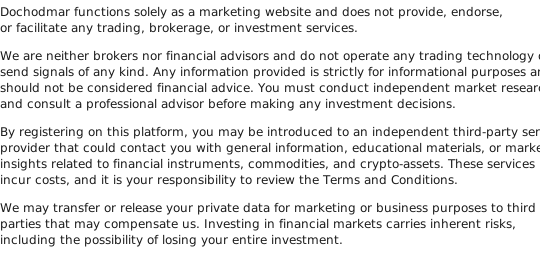
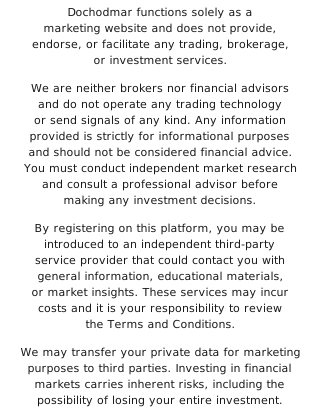
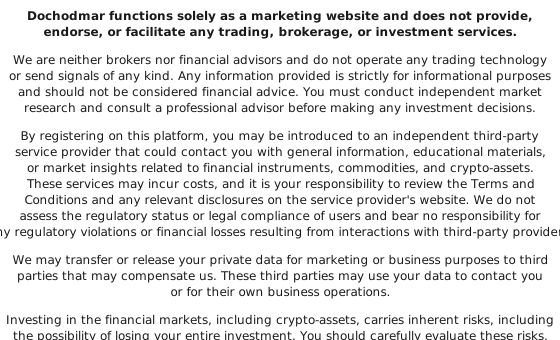
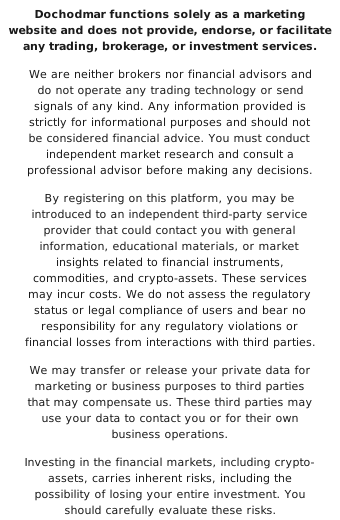
This website functions solely as a marketing platform and does not provide, endorse, or facilitate any trading, brokerage, or investment services.

Read More
Disclaimer Disclaimer